A5 flyers, single-sided, 50 pcs
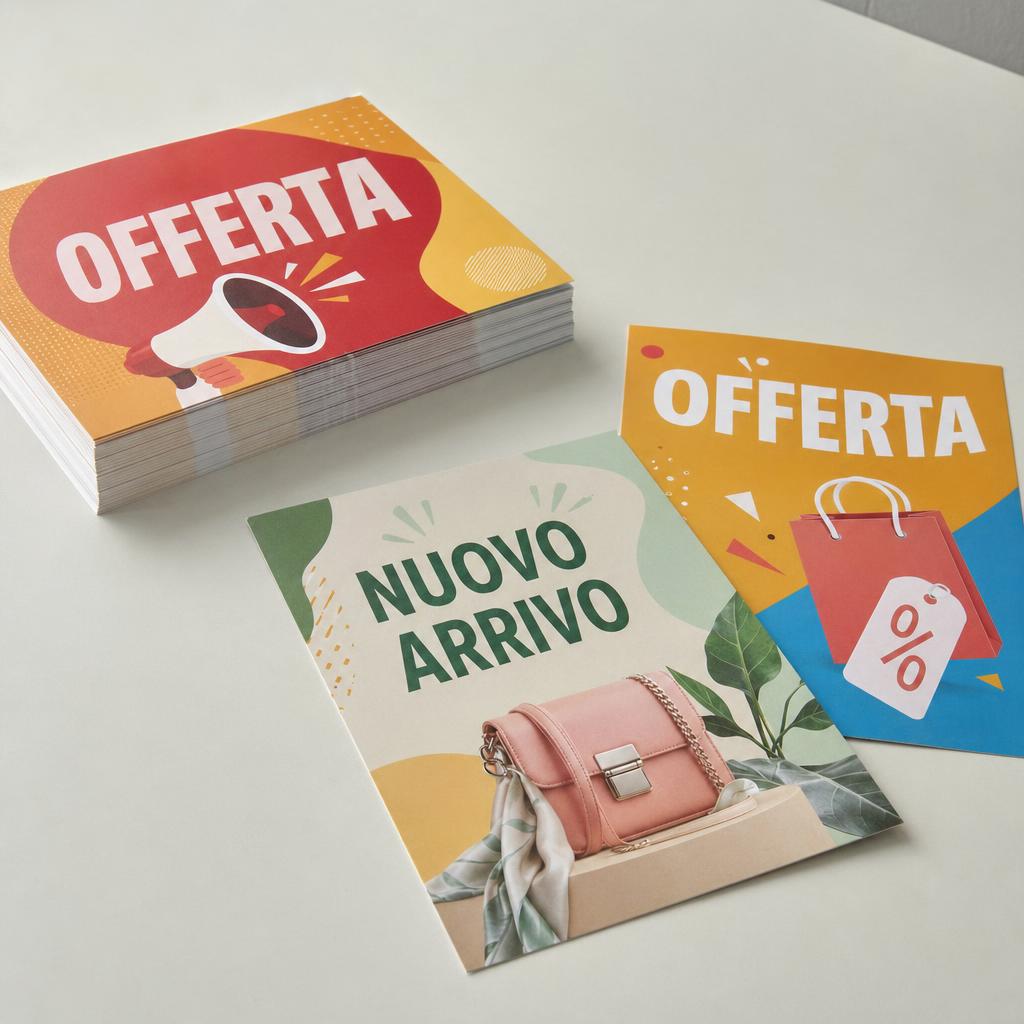

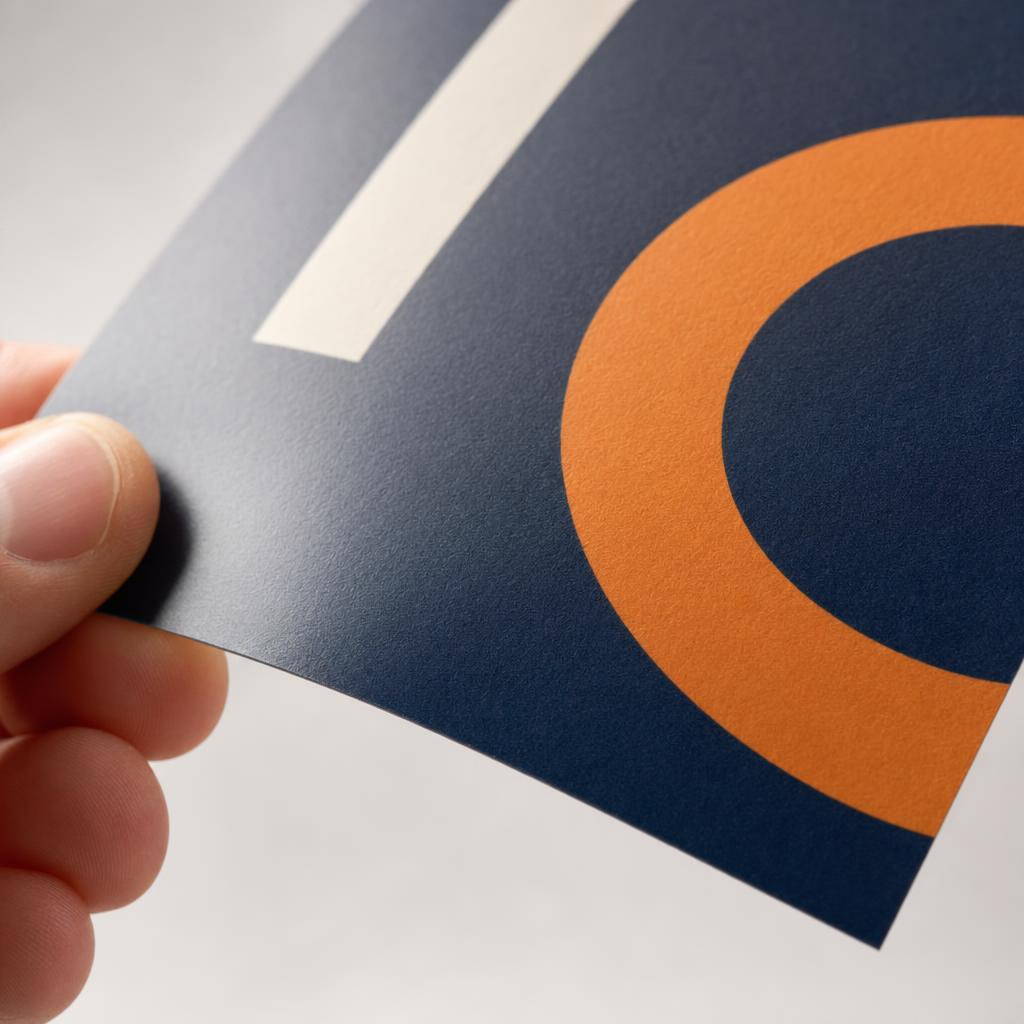
No. Copies: 50; Print options: Single-sided printing; Material: 200 gsm Matte Coated Paper
The single-sided A5 flyers are A5 sheets printed on one side only, with a blank back. The paper is matte coated, with a choice of 135 gsm, lighter, and 200 gsm, sturdier in the hand. Print runs range from 50 to 25,000 copies, in nine tiers: 50, 100, 250, 500, 1,000, 2,500, 5,000, 10,000 and 25,000. They are the classic choice for flyer distribution, retail promotions, events and local communication by shops, agencies and companies. When the message is short and fits on one page, printing on one side is enough.
Take a look at these too
Single-sided A5 flyers for promotions and events
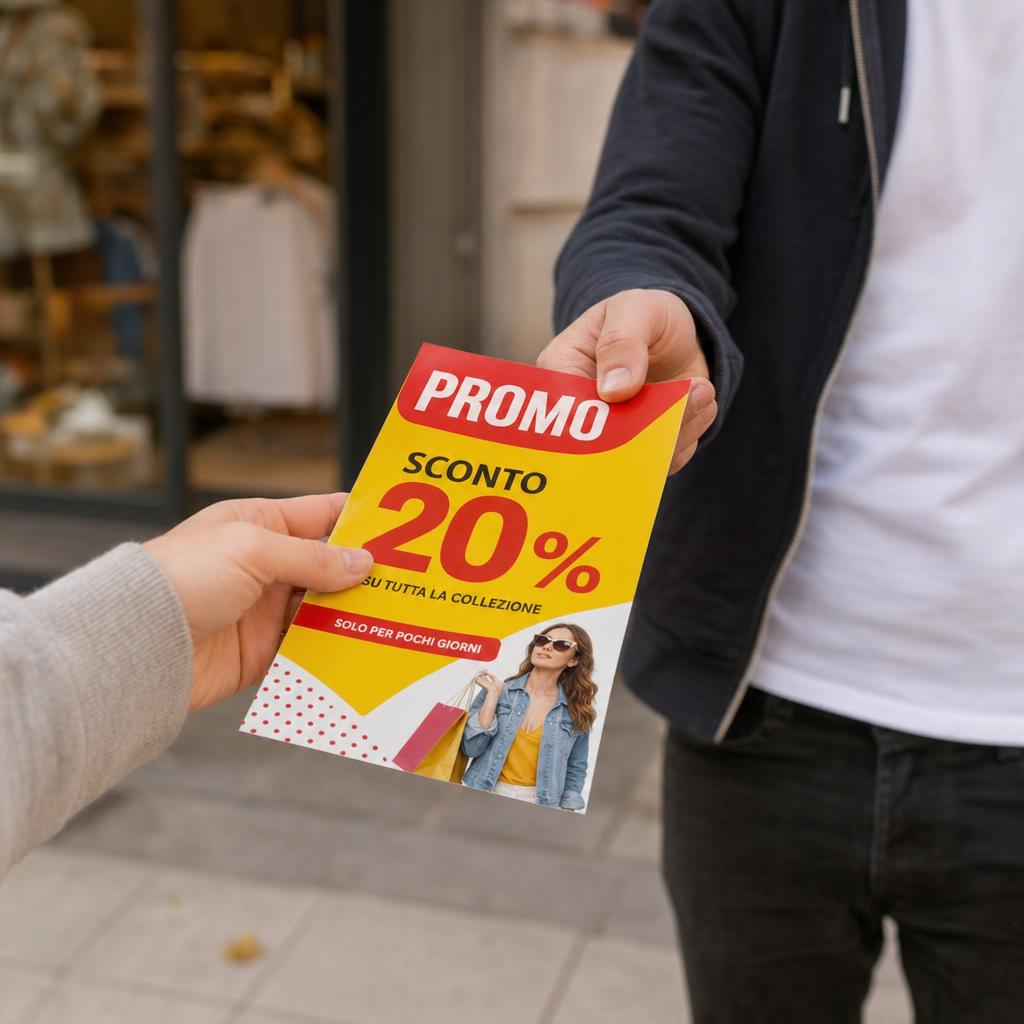
An A5 flyer printed on one side carries a single message: an offer, an opening, a date. It is handed out in person, dropped in letterboxes or left on the shop counter. Businesses, agencies, associations and event organisers use it for local campaigns.
A5 flyers, also called leaflets, are half the size of an A4 sheet. They fit in a hand and in a bag, which is why they are the most widely used format for flyer distribution.
What single-sided A5 flyers are for
- Retail promotions: an offer, a sale, a new product, with the information customers need to find your shop.
- Openings and launches: day, time and address in plain view.
- Events: concerts, parties, public meetings, local fairs, courses.
- Local communication: notices from associations, neighbourhood campaigns, material to leave on the counter or on a notice board.
Single-sided printing makes sense when the message fits on one page, whether the flyer is handed out or pinned up: on a notice board or in a window the back is not seen.
Paper and options
- Print options: Print on front only. The back is not printed.
- Material: Matte coated paper 135 gsm or matte coated paper 200 gsm. The 135 gsm is lighter and suited to large-scale distribution; the 200 gsm gives a sturdier sheet.
Both papers are matte coated: there is no glossy paper among the materials, and there are no lamination options.
How to choose paper and quantity
Start from how you will use the flyers.
- If you hand out large numbers, door to door or in the street, the 135 gsm is the lighter of the two papers.
- If you hand them over in person, leave them on the counter or put them in a folder, the 200 gsm gives a sheet that stays stiffer in the hand.
- For a test or a small event, the low quantities are enough: 50, 100 or 250 copies.
- For a campaign across a neighbourhood or a city, there are high quantity tiers, up to 25,000 copies.
The tiers are fixed: if the number you need is not in the list, choose the next one up.
The two papers up close
The 135 gsm matte coated paper is the light weight: a flexible, easy-to-handle sheet, suited to flyer distribution and high-volume handouts, for informative material that is used once. The 200 gsm is the standard weight, a balance between a solid feel and lightness, suited to most promotional print. If you want a flyer to hold during a meeting or to enclose with a proposal, it is the better of the two. You decide the orientation, portrait or landscape, in the file: the A5 format stays the same.
Format and quantity
The format is A5. The available quantities are 50, 100, 250, 500, 1,000, 2,500, 5,000, 10,000 and 25,000 copies. The configurator calculates the price based on copies and paper.
You do not need to enter the dimensions: the format is already set, you only need to choose quantity and paper weight.
How to order and prepare the file
Choose the quantity and the paper weight, then upload the one-page file. Before sending your artwork, read the file instructions. The configurator shows the available production times; delivery also depends on the shipping method chosen.
A few tips for the design of a single-sided flyer:
- decide what should be read first and give it the most space;
- put the date, place and contact details where they can be seen at a glance;
- use a few colours consistent with your brand;
- prepare the file in A5 proportions and check the details again, numbers and addresses included;
- after uploading the artwork, check the paper and copies in the summary before confirming the order.
When a single side is enough
One side is enough when the reader needs to receive just one piece of information and understand it at once. The blank back is not a limit if the message is built to sit on one side. Some typical cases:
- An event with a date: title, day, time and place. Anyone who wants to know more will look for the website or the number you have given.
- An opening or a change of premises: the new address and the date are the heart of the message.
- A single promotion: one product, one discount, one deadline.
- A notice: a change of opening hours, a holiday closure, a message to the residents of a building or a neighbourhood.
- A sheet to pin up: on a notice board, in a window or on a door the back is not seen, so printing it adds nothing.
If instead you find you have to shrink the text to an unreadable size to make it fit, the message needs a second side.
Reading hierarchy on a single side
On one side everything is in view at the same moment, so the design decides the reading order. Think in three levels.
- The first glance: a short, large headline, or a strong image. It decides whether the flyer is read or put away.
- The content: two or three lines explaining the offer, or a short bulleted list.
- The action: where to go, who to call, by when. Usually at the bottom, clearly separated from the rest.
If an element does not belong to any of the three levels, you can probably remove it. A single-sided flyer works when it leaves empty space around the important information.
How much content fits on an A5
The A5 format is half an A4: large enough for a clearly visible image and headline, small enough to fit in one hand. On one side you can comfortably fit a headline, an image, four or five lines of text and a block with contact details. Beyond that the text has to shrink and the flyer becomes tiring to read.
A practical way to check: write all the text before laying it out and count it. If it runs past a few lines, ask yourself which parts you can move to the website or social media, leaving an address or a QR code on the flyer to find them.
Text templates for the most common A5 flyers
These templates help you write a complete flyer without forgetting anything.
- Opening: what is opening, when, where, why it is worth stopping by.
- Offer: product or service, benefit for the customer, deadline, point of sale.
- Event: title, date and time, place, free entry or booking required, contact.
- Notice: what changes, from when, who to contact for information.
- Course or activity: what you learn or do, when it starts, how to sign up.
Write the shortest sentences you can. A flyer is not the place to explain everything: it should spark interest and show where to find the rest.
A5 flyers to pin on notice boards and in windows
Many single-sided flyers are not handed out but displayed: on the notice boards of schools, gyms, offices and apartment buildings, in the windows of neighbourhood shops, on counters. In these cases the sheet is viewed from a few steps away, and some choices change.
- Enlarge the headline and the date: they must be readable without getting closer.
- Leave the corners free, where pins or adhesive tape are usually placed.
- Use a background that does not blend in with the notice board or the window.
- If the sheet must stay up for weeks, consider the 200 gsm, sturdier than the 135 gsm.
For a larger poster to go alongside the flyers, in the same window or the same space, there are the A3 posters.
Preparing the one-page file
For single-sided printing you upload a single file, in A5 format.
- The file must include the outer bleed required for flyers, essential when backgrounds or images run to the edge: you will find the measurement in the file instructions.
- Trimming can remove 1-2 mm: for this reason text, logos and frames should be kept at least 2-3 mm from the edge of the finished format.
- Choose the orientation, portrait or landscape, directly in the file.
- For resolution, colours and accepted formats, read the file instructions.
Before uploading, print the file on ordinary paper and look at it at actual size. Text that looks large on screen can turn out small on an A5 sheet.
Planning a flyer distribution campaign
The single-sided flyer is a widely used print item in local campaigns. A few steps help avoid wasting copies.
- Define the area: the streets, the neighbourhood or the busy spots where you want to get known.
- Estimate the copies: list the distribution points, that is, shops that display the flyers, street handout days, events, and assign each a number of copies.
- Distribute in waves: a first print run covering part of the area tells you how the public responds, before you cover the rest.
- Note the responses: record, area by area, how many people mention the flyer in the shop or on the phone. It will help you decide where to repeat the distribution.
For this type of distribution the 135 gsm is the weight designed for large volumes, and the high tiers, from 5,000 to 25,000 copies, cover whole areas.
Handing out flyers in person
Handing out flyers is the most direct way to use a single-sided flyer: the reader receives it, looks at it and decides within a few seconds. Some practical tips:
- Choose the moment: the exit from an event, the rush hour on a shopping street, the weekly market.
- Involve nearby shops: a small pile of flyers on the counter of a friendly business reaches customers who would not come past you.
- Accompany the flyer with a sentence: whoever hands it out can say in a few words what you offer, so the sheet is looked at instead of being pocketed.
- Find out about local rules: for street distribution, ask your local council what the rules are.
For handing over in person the 200 gsm gives a sturdier sheet in the hand; for street distribution in large quantities the 135 gsm is lighter to carry.
Reprints and flyer updates
A single-sided flyer is easy to update: a date, a price or an opening time changes. Keep the editable working file and save each version with a name that shows the date and content, so you can quickly find the right one.
When the information expires soon, prefer a lower quantity and reprint when needed. When the message stays valid for a long time, such as the presentation of a business or a list of services, a higher tier saves you from reordering often. In both cases, check the price of the different tiers in the configurator before deciding.
Flyer, double-sided flyer or leaflet
If you are not sure about the format, start from the amount of content.
- Single-sided A5 flyers: one message, one page. It is the simplest solution to lay out.
- Double-sided A5 flyers: the front to catch attention, the back for details, a map or a price list. You will find them in A5 flyers (front and back).
- Leaflet: four sides with one fold, to present a business or a menu. You will find it in Half-fold leaflets, along with the other print items in the Flyers and leaflets category.
Final checks before ordering
- Is the headline understood within a few seconds?
- Are the date, time and address correct and clearly visible?
- Is there at least one contact: phone, website or address?
- Is the file in A5 format, with the bleed indicated in the file instructions?
- Are the paper and number of copies in the summary the ones you want?
Frequently asked questions
What is the minimum quantity?
50 copies. The highest print run available is 25,000.
What paper can I choose?
Matte coated paper, 135 gsm or 200 gsm.
Can I print the back as well?
Printing is on the front only. For both sides there is the front and back version.
Can A5 flyers be printed on glossy paper?
No. The two papers available are both matte coated.
Can I order a quantity different from those listed?
Quantities come in fixed tiers, from 50 to 25,000 copies. Choose the one closest to what you need.
Do I need to enter the dimensions?
No. The format of A5 flyers is fixed and does not need to be entered.
Are flyer and leaflet the same thing?
Yes, they are two names for the same printed item. Here you order it in A5 format, printed on one side.
Does the back of the flyer stay blank?
Yes. With front-only printing the back is not printed.
What paper should I choose for a flyer to pin up?
If it has to stay on display for a long time, the 200 gsm is sturdier. For distribution in large volumes the 135 gsm is the lighter choice.
Can I reprint the same flyer changing only the date?
Yes. Update the file and place a new order, choosing paper and quantity again.
Can I print the flyer in landscape?
Yes. The format stays A5: you set the orientation, portrait or landscape, in the file you upload. Choose the one that best suits the main image.
Do I need to prepare the bleed in the file?
Yes. For flyers the outer bleed is required, in the measurement indicated in the file instructions. Text and logos stay at least 2-3 mm from the edge of the finished format.
Related products
If the content does not fit on one page, choose the A5 flyers (front and back). Discover the other formats in the Flyers category.
If you need more space for your content, there are the Half-fold leaflets. The other flyer formats are on the A5 flyers page. To post the same message in a larger format there are the A3 posters. The Flyers and leaflets category gathers all the promotional print items.
Dall’idea al file pronto per la stampa
Con il servizio di progettazione grafica puoi creare una nuova composizione, vettorializzare un logo o adattare immagini e impaginazione al prodotto scelto. Condividi materiali e indicazioni in chat e rivedi le anteprime prima della preparazione dei file finali.
Scopri il servizio di progettazione grafica
Il servizio grafico è incluso nel prezzo di stampa?
La progettazione grafica è un servizio a pagamento, acquistabile separatamente. Il controllo del file di stampa rimane compreso nel prezzo del prodotto; per creare o modificare la grafica puoi acquistare il servizio dedicato.
Total: 38,35 € (VAT included)