Iron-on name labels for fabrics
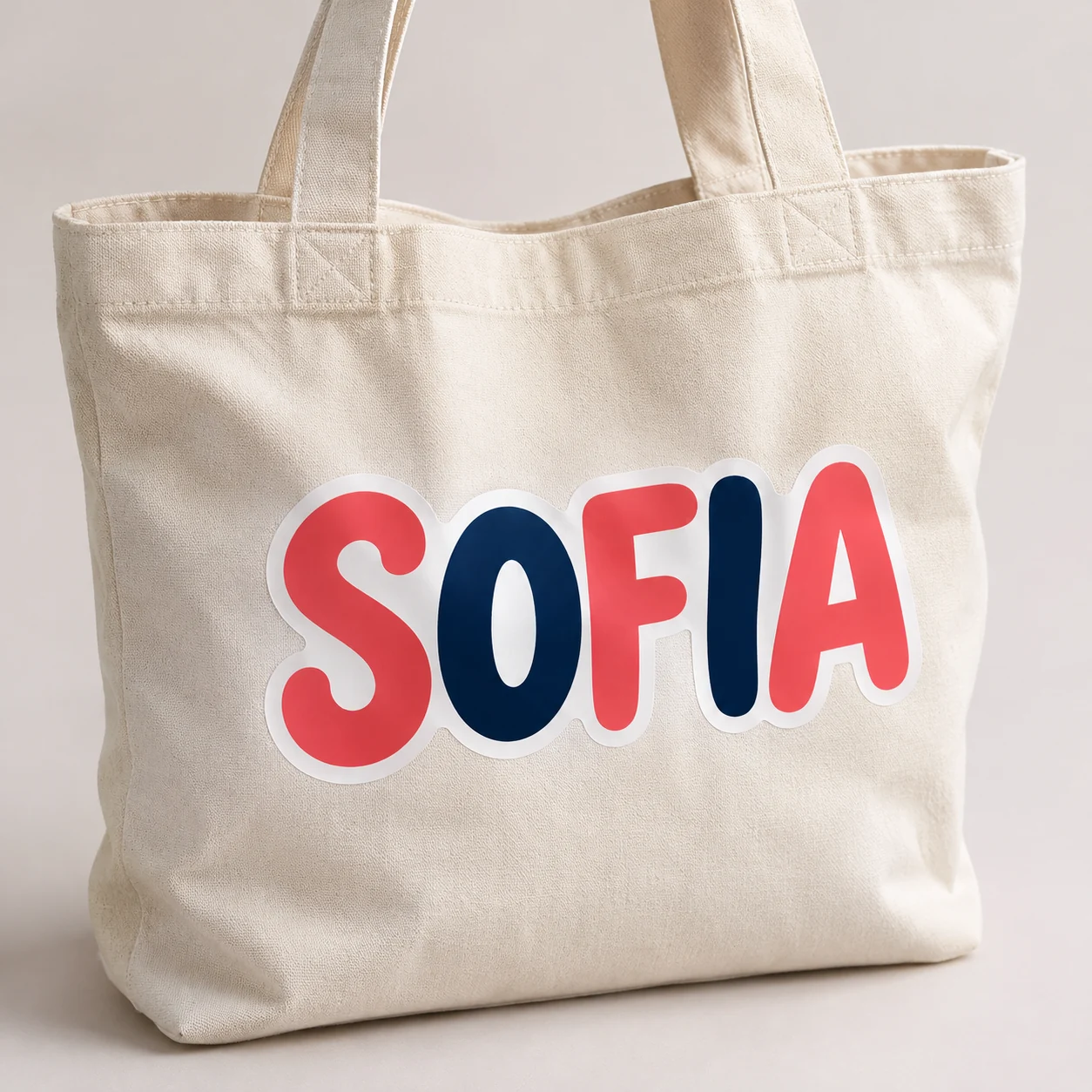
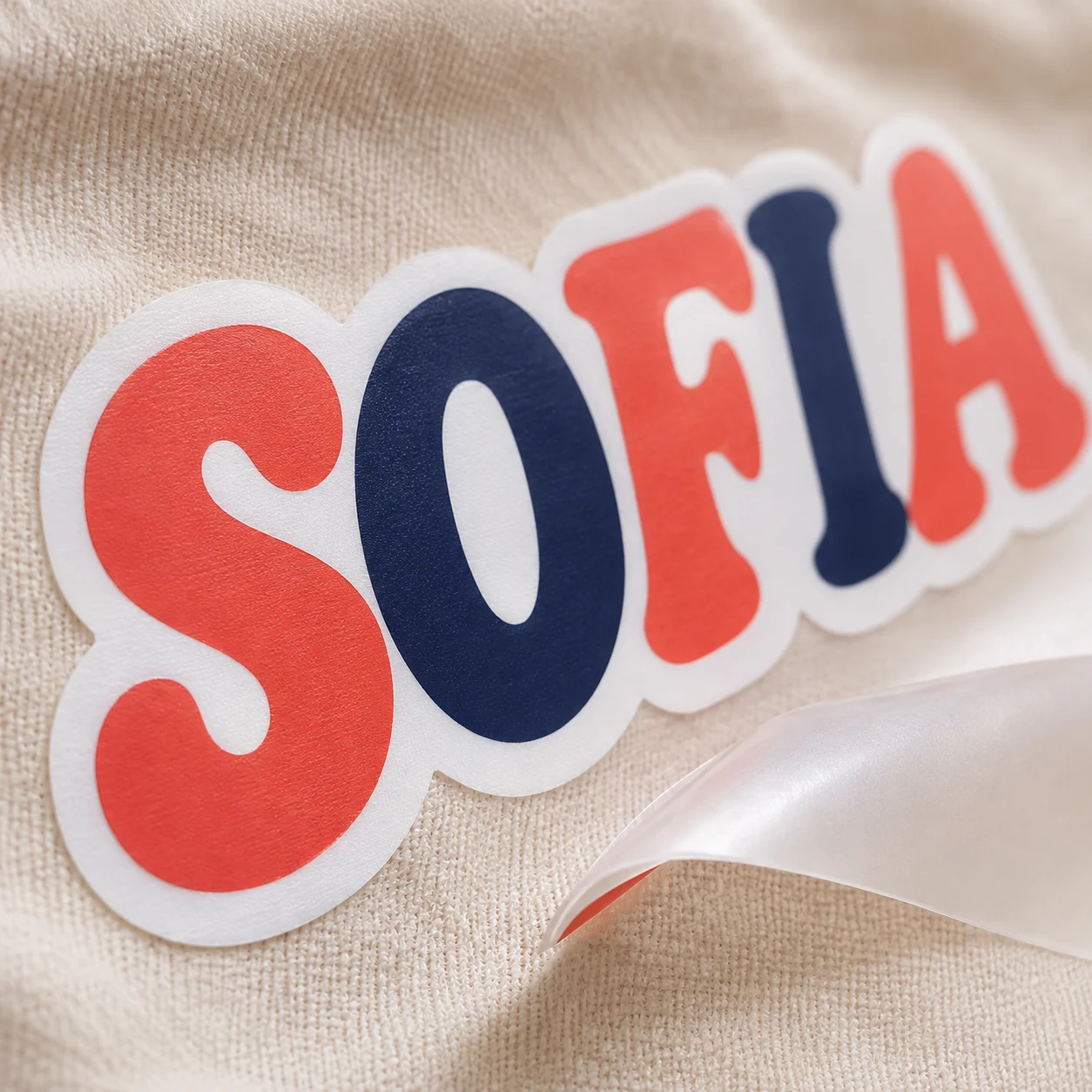
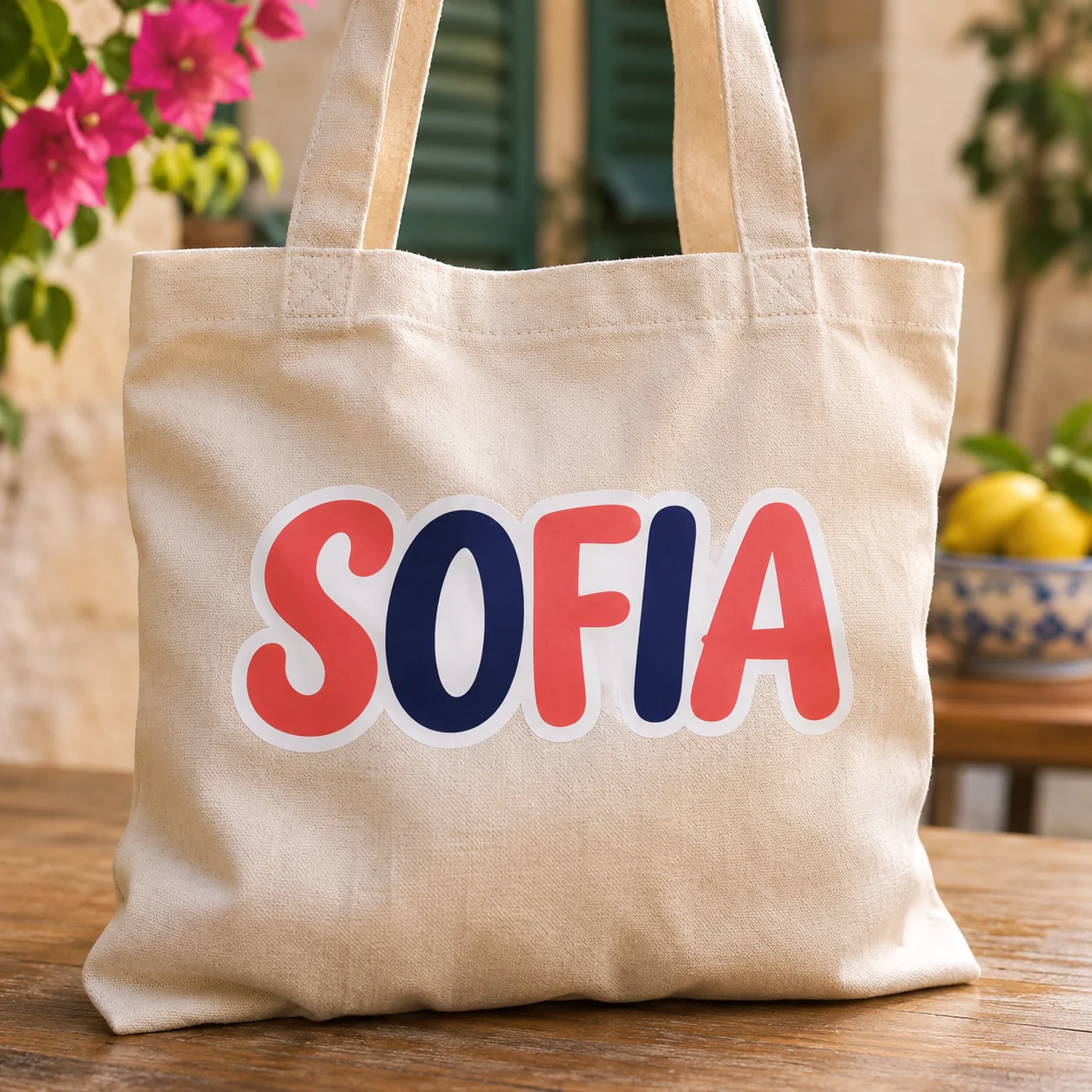
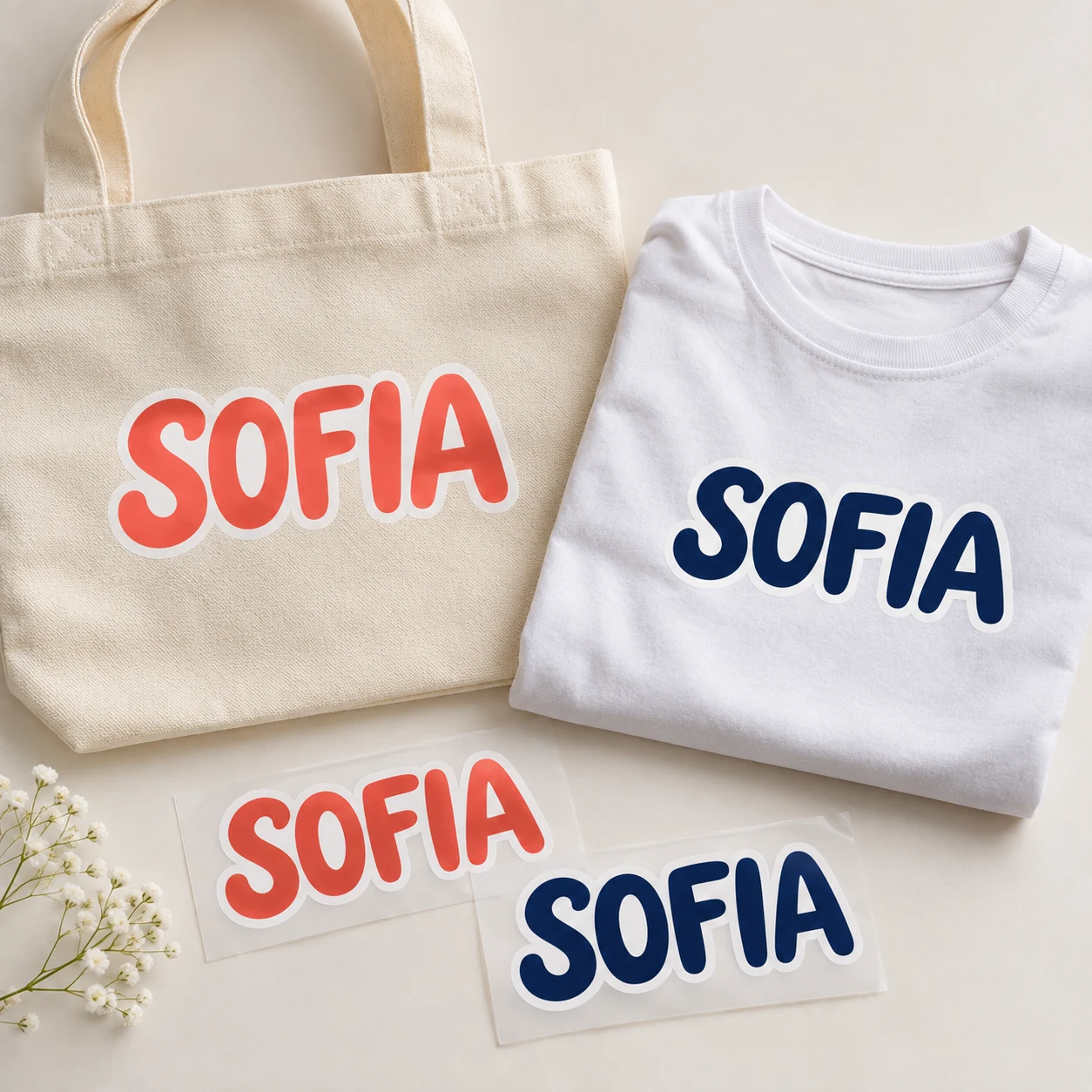
No. Copies: 50; Dimensions in CM: 20x5; Material: White Printable Heat-Transfer Film for Solvent / UV; Weeding of Single Copy: Easy (2–30 pieces, size > 15 mm); Application Tape: Yes
Iron-on names for fabrics and clothes are used to identify garments with a first name, surname or initials, through heat transfer. They are useful for school clothing, sports teams, summer camps and clothing sets, especially when there are many garments to tell apart. Printing is on printable white iron-on. Every order includes weeding, to be indicated as easy, complex or very complex according to the number of pieces and their size, and the application tape to apply the name already aligned. You decide the sizes, up to 68x100 cm, and the number of copies. Before use, check the application instructions suited to the fabric.
Take a look at these too
Iron-on names for clothes and fabrics
School smocks that all look alike, identical training shirts, towels and bags from an entire summer camp. An iron-on name solves the mix-up problem: you apply it with heat to the fabric and the garment gets an easily recognisable owner. Schools, sports clubs, families and facilities that manage clothing sets use it to mark items in bulk.
Where an iron-on name is used
- School and nursery: children's smocks, sweatshirts, bibs and bags, which easily get mixed up in the classroom.
- Sports: shirts, tracksuits and bags for a team, with the athlete's first name or surname.
- Summer camps: T-shirts and towels for large groups.
- Clothing sets and facilities: garments that go through a shared laundry and must return to the right person.
- Work: uniforms and coats with the operator's name.
Compared with a sewn-in label, the iron-on name is fixed with heat and needs no needle and thread. The garments and the application are not part of the supply: you receive the names ready to apply. Before processing the whole series, it is worth testing on the same fabric.
Material and name printing
There are few choices, because the process is already set up for this use. The material is the Solvent / UV Printable White Iron-On: the name is printed on a white film. You decide the text, the font and the colour of the letters in your file. You can use a single colour for all the names or different colours, for example to tell classes or teams apart.
Which fabrics can an iron-on name be applied to
The iron-on sheet is applied with heat to cotton, polyester and blended fabrics. The material is suitable for T-shirts, bags and sportswear. To find out which group a garment belongs to, just check the composition label sewn inside. If the fabric is not among these, or if you do not know its composition, do not assume the name will stick: results depend on the fabric, and a test on an identical garment saves you from spoiling the series.
How it is made: white sheet, print and transfer film
Each name is made of three elements. The first is the white iron-on sheet. The second is the print, made with solvent or UV inks: the print gives colour to the letters or the background. The third is the application tape, a transparent film laid over the iron-on after weeding. The tape is used to transfer the name onto the fabric in one piece and is essential when the name is made of several separate elements, such as separate letters. The material roll is at most 100 cm wide.
Weeding and application tape
- Weeding of the Single Copy: the waste around the letters is always removed. Indicate how intricate your copy is: Easy (from 2 to 30 pieces, elements over 15 mm), Complex (from 31 to 100 pieces, elements over 10 mm), Very Complex (over 100 pieces, elements under 10 mm). A piece is each separate letter or mark.
- Application Tape: Yes. The letters travel on a transfer sheet that keeps spacing and alignment.
How to choose the weeding level for names
With names the piece count grows quickly, so it is best to work it out on the file before filling in the configurator.
- If each name is a label with a single outline, for example a white rectangle with the text printed on it, each name counts as one piece. Up to 30 names per copy you are in the Easy level, as long as the elements are over 15 mm.
- If the name is made of separate letters, each letter counts as one piece. A first name and surname of fifteen letters are fifteen pieces: with several names in the same copy you quickly reach the Complex level.
- Over 100 pieces per copy, or with letters smaller than 10 mm, the level is Very Complex.
Dots, accents and hyphens are separate elements and usually the smallest: they decide the minimum size.
Separate letters or label with background: two ways to set up the name
Because the sheet is white and the print is in colour, the same name can be prepared in two ways.
- Name as separate letters: only the letters remain on the garment, with no background. The effect is lighter, but each letter is a piece to weed and keep aligned: this is where the tape makes the difference. It suits large names, on the chest or the back of a shirt.
- Name on a label: the text is printed inside a solid shape, for example a rectangle or an oval, with a white or coloured background. The outline is a single one, so the name counts as one piece. It suits small names, for the collar or the inside of the garment, and texts on two lines with name and class.
There is also a practical reason to prefer the label when the text is small. In the Very Complex level, very small parts may not be weedable. A dot or an accent of a few millimetres, on its own, is exactly one of those parts; inside a label with a single outline, instead, it is just print.
Sizes and quantities
Enter the dimensions in centimetres. They are free up to a maximum of 68x100 cm, so you can lay out several names in the same copy. You decide the number of copies. The configurator calculates the price based on size, quantity and options.
The size to enter is that of the whole copy, not of the single letter. For a single name, enter the footprint of the name. For a sheet with the list of a class or a team, enter the width and height of the complete layout.
One copy or several copies: how to organise the order
You have two options, and the choice depends on how many different names you need.
- Same name repeated: you prepare one copy with that name and indicate how many copies you want. This is the case for someone who needs to mark a person's entire set of clothing.
- Many different names: you lay out the names in a single copy, within 68x100 cm, leaving space between them so they can be separated. This is the case for a class or a squad of athletes.
In the second case you can repeat each name two or three times in the layout, so you have a spare for different garments of the same child or the same athlete.
Three examples of piece counting
To understand which level to indicate, try working out the count on concrete cases.
- A class: 25 children, each name on a label, repeated twice. That is 50 pieces per copy: Complex level, provided each label is over 10 mm.
- A team: 18 surnames as separate letters, on average seven letters each. That is about 126 pieces per copy: Very Complex level. If you prefer to stay under 100 pieces, split the squad into two configurations with half of the surnames each.
- A personal clothing set: the same name on a label, repeated 20 times in the copy. That is 20 pieces: Easy level, if each label is over 15 mm.
In all three cases the size to enter is that of the whole layout, within 68x100 cm, and the number of copies stays at 1 until you want a second identical sheet.
Practical tips on text, font and file
- Collect the information in a single list and have it checked by someone who knows the names: double letters, accents and apostrophes are the most frequent mistakes.
- Choose a solid, readable font. Very thin or very small letters push the process to the highest level.
- Decide the size starting from the garment: a name for the collar is different from a name for the back of a shirt.
- To check whether the text is readable, print a full-scale test on ordinary paper and place it on the garment.
- Check that the proportions of the file match the width and height entered.
- Reread the order summary before confirming it: sizes, copies, weeding level.
How to order and prepare the file
Collect the list of names and check the spelling before laying out. Choose a size that is readable on the garment the name is intended for. Before sending the artwork, read the file instructions. The configurator shows the available production times; delivery also depends on the chosen shipping.
Frequently asked questions
What is meant by pieces in weeding?
The separate elements of the copy, such as single letters. From 2 to 30 pieces the level is Easy, from 31 to 100 Complex, over 100 Very Complex.
Do the names come with the transfer sheet?
Yes, the application tape is included as the only choice.
What sizes can I order?
Any size up to 68x100 cm.
Can I order different names in the same order?
Yes, by laying them out in the same copy within the maximum size. Count all the pieces to indicate the correct weeding level.
Can I choose the colour and font of the name?
Yes. The film is white and printable: colour and font are those of the file you upload.
Do I have to remove the waste around the letters?
No, weeding is included among the processes, in one of the three levels.
Is there a minimum number of names?
The copies field is free, so you can order even a single copy.
Does the name have to be sewn onto the garment?
No, it is an iron-on: it is applied with heat to the fabric. The application is not included and must be tested on the fabric you use.
Which fabrics can I apply an iron-on name to?
Cotton, polyester and blended fabrics. The material is suitable for T-shirts, bags and sportswear.
Is the white background visible?
It depends on the file. With separate letters only the printed letter remains. With the name on a label the background is part of the artwork and can stay white or be printed in colour.
Can I order names with very small letters?
Under 10 mm the process moves to the Very Complex level, and very small parts may not be weedable. For small texts the name on a label is safer.
What is the transparent film over the names for?
It is the application tape: it holds together the elements of the already weeded name and lets you transfer it onto the fabric in one piece.
Related products
Among the other iron-on products in the category: to personalise T-shirts and uniforms with logos and graphics see the Custom iron-on transfers; for small-format marks and acronyms the Iron-on labels. The category is Iron-on transfers for fabrics.
Dall’idea al file pronto per la stampa
Con il servizio di progettazione grafica puoi creare una nuova composizione, vettorializzare un logo o adattare immagini e impaginazione al prodotto scelto. Condividi materiali e indicazioni in chat e rivedi le anteprime prima della preparazione dei file finali.
Scopri il servizio di progettazione grafica
Il servizio grafico è incluso nel prezzo di stampa?
La progettazione grafica è un servizio a pagamento, acquistabile separatamente. Il controllo del file di stampa rimane compreso nel prezzo del prodotto; per creare o modificare la grafica puoi acquistare il servizio dedicato.
Configurations
- Iron-on name labels (GB)
No. Copies: 50; Dimensions in CM: 20x5; Material: White Printable Heat-Transfer Film for Solvent / UV; Weeding of Single Copy: Easy (2–30 pieces, size > 15 mm); Application Tape: Yes
- Iron-on name labels (US)
No. Copies: 50; Dimensions in CM: 20x5; Material: White Printable Heat-Transfer Film for Solvent / UV; Weeding of Single Copy: Easy (2–30 pieces, size > 15 mm); Application Tape: Yes
Starting from 58,04 €/m², VAT excluded · Total: 35,40 € (VAT included)