Car stickers

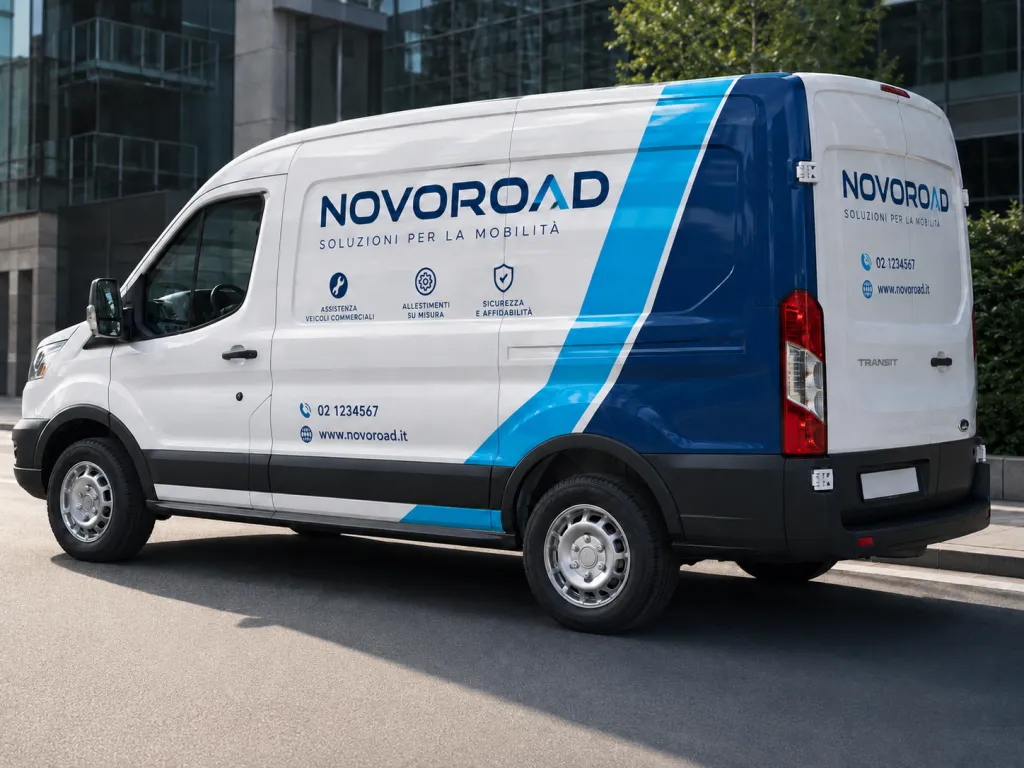
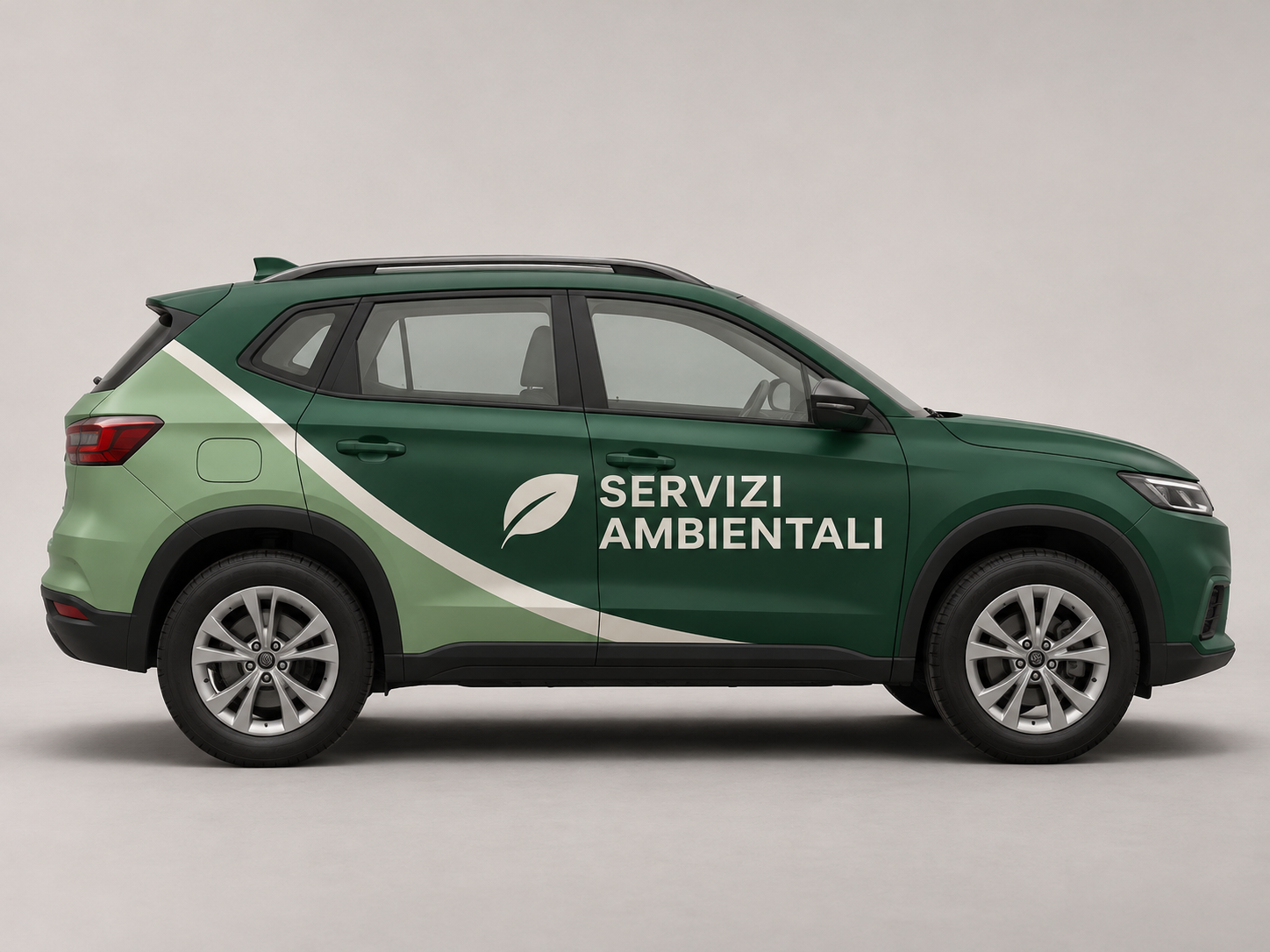
Stickers for cars, vans and commercial vehicles
Here you can find car stickers to print with your own artwork: for bodywork, curved surfaces, company vans and windows. There are three made-to-measure products, designed for logos, lettering and partial vehicle decoration.
They are aimed at tradespeople, businesses, agencies and vehicle outfitters who want to turn a vehicle into a communication tool for their customers, and at anyone who wants custom stickers for their own car. They are not ready-made kits: you set the dimensions yourself, based on the area of the vehicle.
Which car sticker to choose
- Polymeric sticker: a glossy white conformable PVC, cast type. Thanks to the elastic memory of the material, it adapts to curved surfaces, rivets and irregularities, such as those of a vehicle, but also to curved columns and furnishings.
- Van stickers: the advertising sticker for vans, company cars and buses. It offers one material for the bodywork and one for the windows, and it is the choice for fleets and promotional vehicles.
- Car wrapping film: bodywork stickers for the partial decoration of cars, motorbikes, vans and commercial vehicles. It covers specific areas of the vehicle, not the whole bodywork.
Materials and lamination
The polymeric sticker is printed on Long Life glossy white adhesive PVC. Van stickers and car wrapping use 3M Control Tack vehicle PVC, an adhesive designed for partial decoration of car, motorbike and van bodywork. For windows, van stickers offer One-Way adhesive PVC.
Lamination is glossy or matt, always with a UV filter. In car wrapping it is always included, in the Long Life version. With the other two products you can also order the sticker without lamination, and for van stickers you can choose the Extra UV Guard quality.
Lamination: why it matters on a vehicle
A car sticker works outdoors, exposed to sunlight, rain and washing. Long Life lamination, available for the polymeric sticker and for car wrapping, is a polymeric film with multiple UV filters, which makes the print more resistant to fading and weathering. The matt version has a satin effect that reduces glare.
The “None” option leaves the print without additional protection: the configurator recommends it only for indoor, temporary use. For a vehicle that is on the road every day, it is therefore better to choose one of the two laminations.
Car stickers: the three materials in practice
Each material suits a different surface of the vehicle. Before choosing, look at where the artwork will go.
- Long Life glossy white adhesive PVC, in the polymeric sticker. It is a conformable cast PVC: choose it when the artwork has to follow curves, rivets and small irregularities.
- 3M Control Tack vehicle PVC, in van stickers and car wrapping. The adhesive layer has glass microspheres and air channels, which help you apply the artwork without bubbles. It is made for partial decoration of the bodywork of cars, motorbikes and vans, not for full vehicle wrapping.
- One-Way adhesive PVC, only in van stickers. It is a micro-perforated film: from outside you see the artwork, from inside you can still see through the glass. It is the material for windows and rear windows.
In van stickers, 3M Control Tack can only be combined with Extra UV Guard lamination, not with Standard. Keep this in mind when you fill in the Lamination Quality option. Extra UV Guard is a polymeric lamination with reinforced UV protection, designed for long-term outdoor applications.
Stickers for company and private cars: examples of use
The same three products serve very different projects. A few examples help you start from the right configuration.
- Tradesperson with a service car: logo, business name and phone number on the doors. Choose the contour kiss cut and application tape, so that only the lettering stays on the vehicle.
- Fleet of cars and vans: the same artwork on every vehicle. You set up the artwork once and enter the number of copies.
- Private car: a stripe or a decoration on one area of the bodywork. Here the most suitable solutions are car wrapping film or the polymeric sticker, if the surface is very curved.
- Rear windows: artwork covering the whole rear window. For glass, the material is the One-Way adhesive PVC in van stickers.
- Promotional vehicle: a vehicle fitted out for an event or a campaign, with larger graphics on the sides and tailgate.
Where to apply stickers on the vehicle
- Sides and doors: the most used area for logo, company name and contact details. These are large, slightly curved surfaces.
- Tailgate and rear: what people following the vehicle in traffic will read. Large lettering and little information work well here.
- Bonnet and roof: for stripes and decorative graphics. Check the curvature before choosing the material.
- Windows and rear window: with the One-Way adhesive PVC in van stickers, the material on this page intended for glass.
Before ordering, look at the surface up close. Handles, mouldings, joints between panels and ribs in the sheet metal interrupt the artwork: keep text and logos away from these points.
Cutting, weeding and application tape
For all three products the cut can be straight, squared and flush with the artwork, or contour kiss cut, along the outline of logos and lettering: it cuts only the adhesive and leaves the siliconised backing intact. Alternatively, you receive the print untrimmed, on the roll, to trim yourself. Weeding has three levels of complexity, linked to the number of pieces and the minimum size of the details. Application tape is requested separately, when needed to transfer the artwork onto the vehicle.
The three levels are: easy, from 2 to 30 pieces with details larger than 15 mm; complex, from 31 to 100 pieces with details larger than 10 mm; very complex, over 100 pieces or with details smaller than 10 mm, where very small parts may not be weedable. The polymeric sticker and van stickers also offer the “kiss cut only” option: the sticker arrives cut and you remove the excess material yourself. Van stickers also offer “weeding not required”, for prints that arrive in one piece, with no parts to remove.
Straight, contour or on the roll: cutting car stickers
- Straight cut: a straight cut flush with the artwork, with clean edges. On the vehicle you apply a whole rectangle, background included. It suits information panels and full-surface graphics.
- Contour kiss cut: follows the outline of logos and letters. Only the artwork stays on the vehicle, without the rectangle around it. It is the typical cut for lettering with name and contact details.
- Untrimmed, on the roll: you receive the print without cutting and you trim it yourself. It suits those who prefer to cut to size during installation.
In the polymeric sticker the material is white. In a straight-cut sticker, the unprinted areas therefore stay white: if you want only the logo to show on the bodywork, choose the contour cut.
Car stickers and bodywork colour
Compare the colours of the artwork with those of the vehicle before ordering. On dark bodywork you need light, well-spaced text. On light bodywork, solid dark colours work well. Before sending the file, try the artwork on a photo of the vehicle, at the same scale: you will immediately see whether the artwork reads well and whether the proportions are right.
Weeding: how to count the pieces
The weeding level refers to a single copy. Count each separate letter, number or symbol and measure the smallest detail.
- A logo and a name with a few large letters usually fall into the easy level: from 2 to 30 pieces above 15 mm.
- Company name, phone number and website on the same door often exceed 30 pieces: this is the complex level, if the details stay above 10 mm.
- Small, dense lettering, with parts under 10 mm, is very complex. Very small parts may not be weedable.
For car wrapping film you must always choose one of the three levels. For the polymeric sticker and van stickers you can also request “kiss cut only” and remove the excess material yourself.
How to choose between the three products
- You have artwork to apply on a surface with curves, rivets or small irregularities: polymeric sticker.
- You need to fit out a van or a company car, perhaps with part of the artwork on the windows: van stickers, the only product with two materials.
- You want to decorate an area of the bodywork with a vehicle film that is always laminated: car wrapping film.
- Glossy or matt: glossy lamination gives a shiny effect, close to that of paint and the bodywork colours. Matt reduces glare.
- For lettering and logos with separate letters, choose the contour cut and add application tape, so that you apply everything in a single step.
Sizes and files for car artwork
Dimensions are free: the configurator does not offer fixed formats. Measure the width and height of the area to cover with a flexible tape measure and enter the centimetres. If the artwork is large, check that the file has the same proportions as the measured area. For a fit-out on several sides of the vehicle, it is better to configure each side with its own dimensions, so that the items stay separate in the cart. Check the summary before confirming the order: material, lamination, cut and number of copies.
How to order
Measure the area of the vehicle to decorate, set the dimensions and options, and upload the artwork after reading the file instructions. The price is calculated based on format, quantity and finishes. The available production times are in the configurator, and delivery also varies according to shipping.
How to prepare the file for car stickers
Always read the file instructions before uploading it. Here are the points to check.
- Straight-cut artwork in medium or large format: there is no mandatory bleed. The background can reach the edge, without reducing the design and without creating white borders.
- Text and logos: trimming can remove 1-2 mm. Keep essential lettering, logos and frames at least 2-3 mm inside the finished size.
- Contour-cut artwork: if the print reaches the cut line, an outer bleed is needed. The measurement depends on the product and is given in the file instructions.
- Vector files: a vector file does not by itself result in a contour cut. You choose the cut in the configurator.
- One file for each area: if the left side, right side and tailgate have different dimensions, prepare one file for each, with the proportions of the measured area.
Before sending, reread phone numbers, web addresses and names. On a car sticker a typo can be read from far away.
Ordering car stickers online, step by step
- Choose the product based on the surface: curves, bodywork or glass.
- Measure the area of the vehicle and enter width and height in centimetres.
- Enter the number of copies: one for a single vehicle, more for a fleet.
- Set the material, the lamination and, for van stickers, the lamination quality.
- Choose cut, weeding and application tape.
- Upload the file after reading the instructions and check the summary before confirming.
Frequently asked questions
Does car wrapping cover the whole car?
No. It is a product for partial decoration: stripes, logos and graphics on specific areas of the bodywork.
Which sticker should I choose for the windows of a van?
One-Way adhesive PVC, available in van stickers. It is the material intended for application on the vehicle's glass.
Glossy or matt?
It depends on the look you want to give the design: all three products offer lamination in both finishes, both with a UV filter.
Can I order car stickers cut to the shape of my logo?
Yes. The contour kiss cut is available in all three products and follows the outline of the artwork.
Can car stickers be ordered without lamination?
The polymeric sticker and van stickers can, but without protection the recommended use is indoor and temporary. Car wrapping film is always laminated, glossy or matt.
What is the difference between the polymeric sticker and car wrapping film?
The material: Long Life glossy white adhesive PVC, conformable, in the first; 3M Control Tack vehicle PVC, designed for partial bodywork decoration, in the second.
Are there standard sizes for car stickers?
No, they are made to measure. Every vehicle has different surfaces, which is why you enter the dimensions yourself.
Do I need to order application tape?
Only if the artwork is made up of several separate elements, such as the letters of a line of text: the transfer film keeps all the elements in position. For a straight-cut sticker in a single piece it is not necessary.
Which lamination should I choose with 3M Control Tack in van stickers?
Extra UV Guard. With this material the Standard quality is not compatible.
Is bleed needed in the file for car stickers?
It depends on the cut. For straight-cut artwork in medium or large format it is not mandatory. For a contour-cut sticker with the print reaching the outline it is: the measurement is in the file instructions.
Can I order identical car stickers for several vehicles?
Yes. You set up the sticker once and enter the number of copies. If the vehicles have different surfaces, create one item for each size.
Can I put car stickers on windows?
Yes, with the One-Way adhesive PVC in van stickers. It is a micro-perforated film: from outside you see the artwork, from inside you see through the glass.
Are car stickers also suitable for motorbikes?
3M Control Tack vehicle PVC is designed for partial decoration of cars, motorbikes and vans. You can find it in van stickers and in car wrapping film.
Products related to car stickers
Car stickers are part of the Custom stickers, adhesive labels category. Here is when to choose another page.
- For artwork on curves and rivets, open the Polymeric sticker for cars and curved surfaces.
- For vans, company cars and buses, with a material for windows as well, open Van stickers.
- To decorate an area of the bodywork, open Printed car wrapping film.
- If the stickers are not for the vehicle but for objects, giveaways or packaging, see Custom stickers.
- To mark products and packaging there are Custom adhesive labels.
- For the shop window, instead of the vehicle's glass, open Custom window graphics: stickers for windows and shop windows.
- To bring the same logo to the walls of the office there are Wall stickers.
- For the uniforms or T-shirts of the people who drive company vehicles, consider Custom iron-on transfers for fabrics.