Oil bottle labels
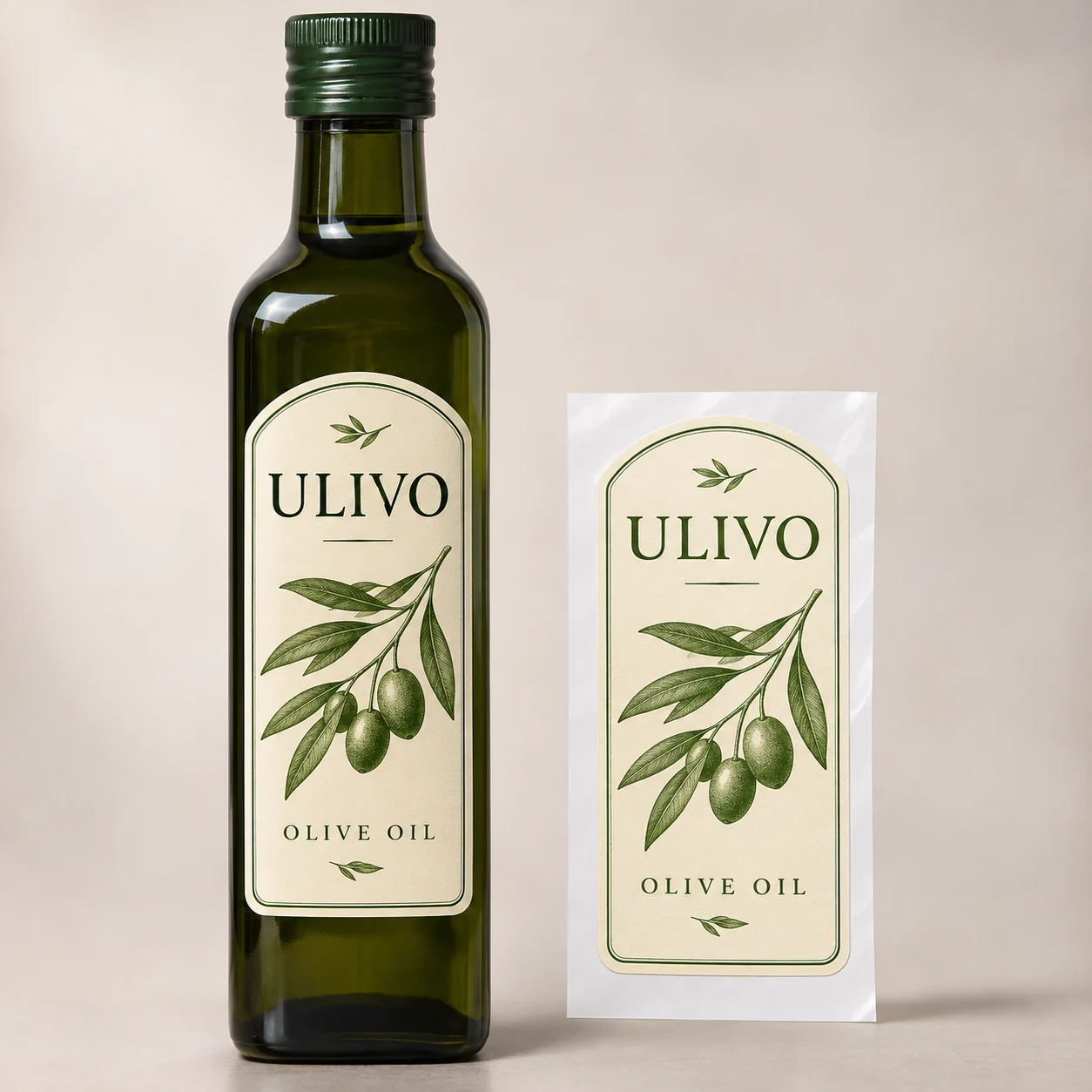
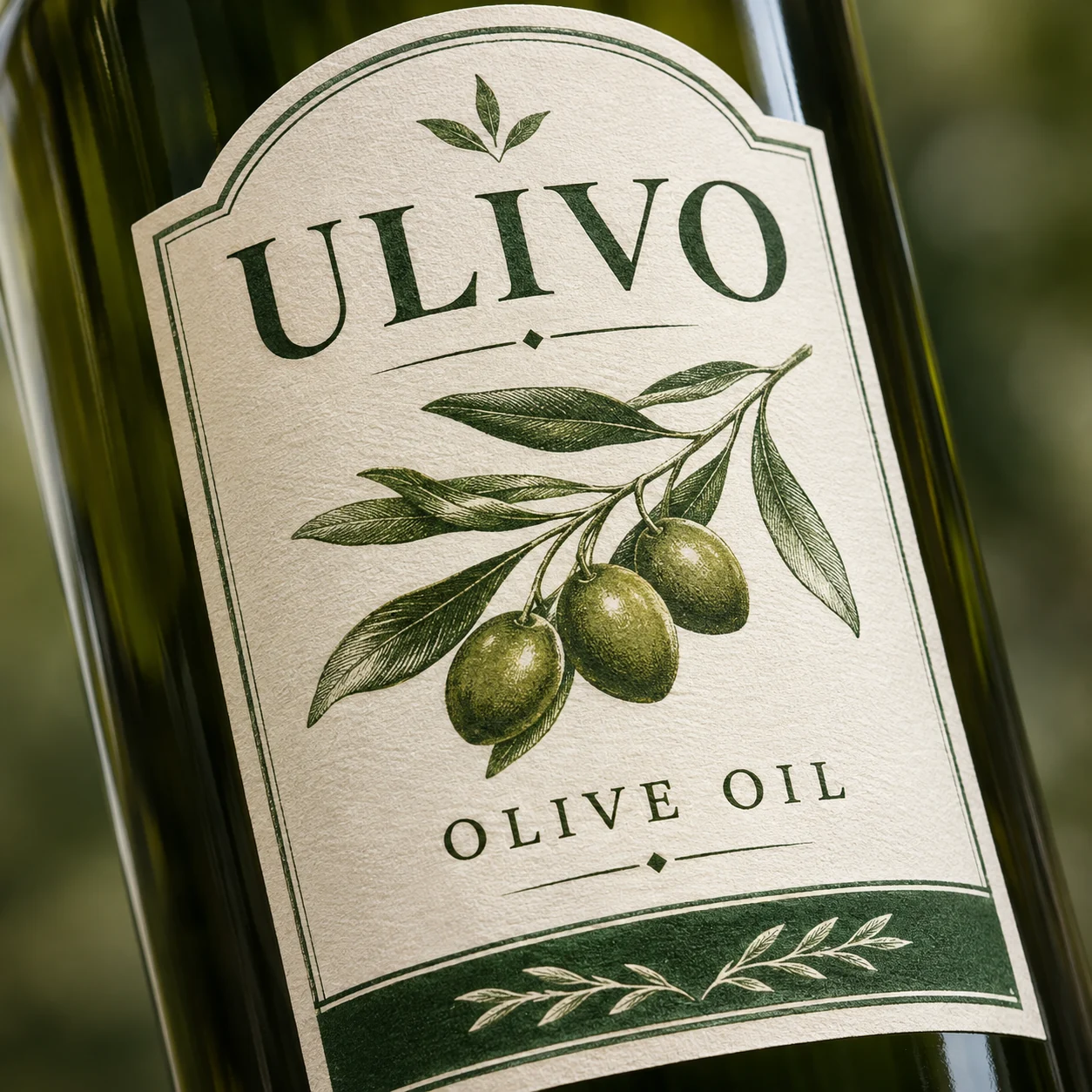
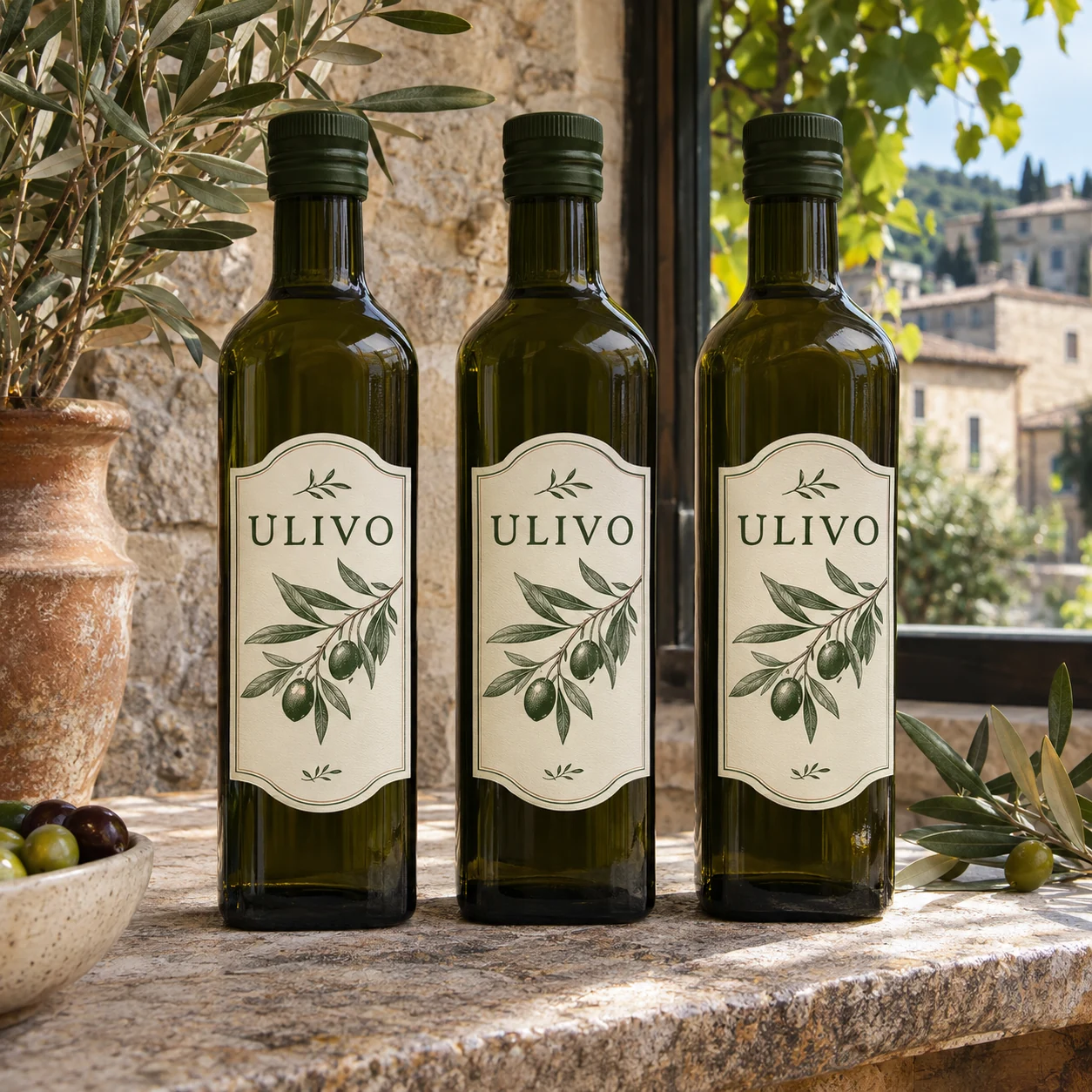
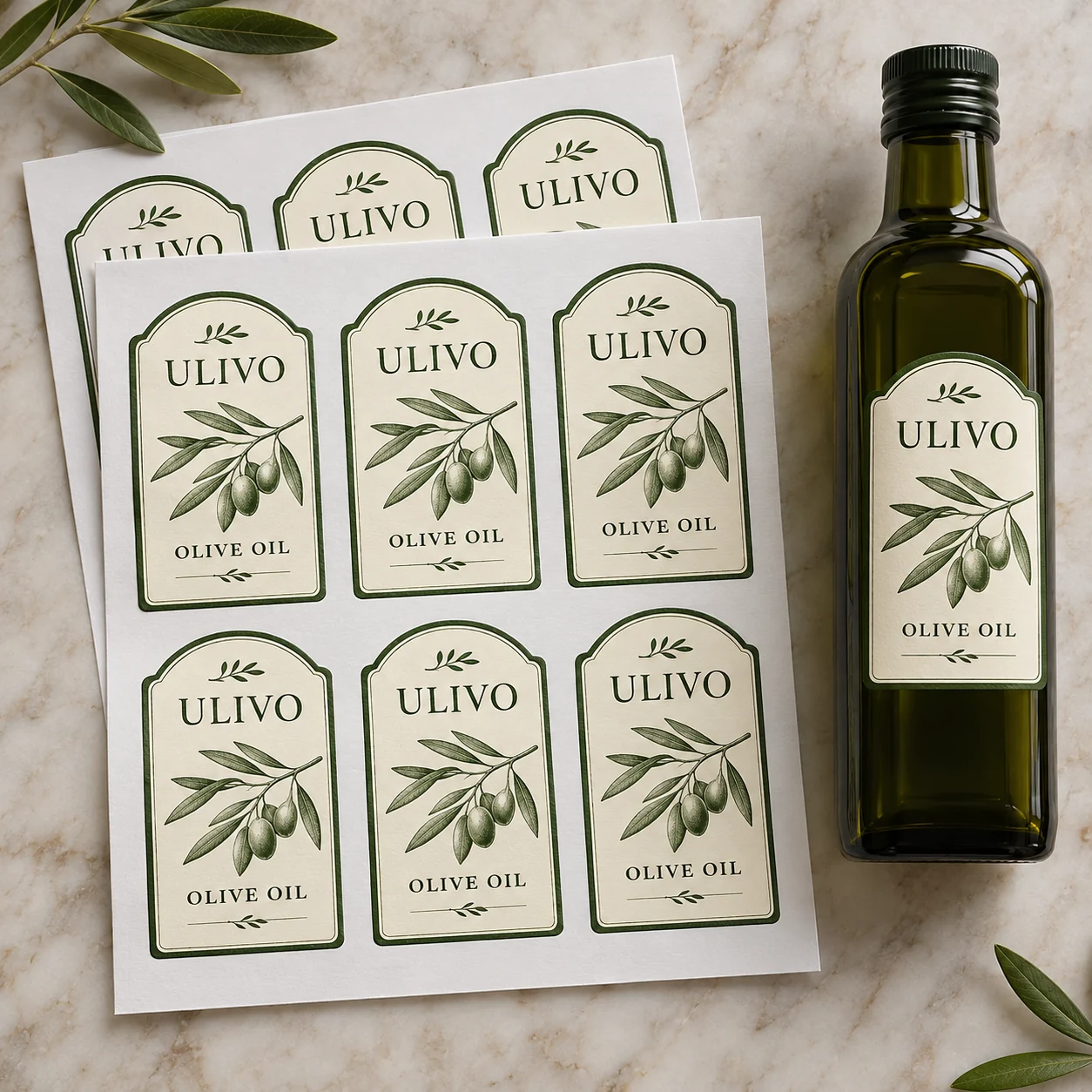
No. Copies: 200; Custom format (CM): 7x10; Material: Self-adhesive PVC for labels; Type: Adhesive Labels with Half Cut; Colour: White; Material finish: Matte; White Ink Printing: None; UV metallic effect: None; 3D varnish: None; Scratch-resistant coating: None
Custom olive oil labels identify bottles, tins and other containers with the name of the oil mill, the variety and the vintage. They are adhesive labels with kiss-cut: they peel off the backing one at a time and are applied to the outside of the packaging. The configurator offers adhesive PVC and adhesive paper for labels, in white, transparent or cream, with matte or glossy finish. On top of these choices you can add spot white printing, UV metallic effect in gold or silver, spot 3D varnish and scratch-resistant coating. The maximum size is 32x45 cm, with quantities of 50, 100, 250, 500 and 1000 copies. They are designed for oil mills, farms and extra virgin olive oil producers.
Take a look at these too
Custom olive oil labels for oil mills and farms
Every harvest brings different packaging: the dark bottle, the tin, the gift size. Your olive oil label has to suit them all. You print adhesive labels with your own artwork in the sizes you need, to tell varieties, vintages and product lines apart, for extra virgin olive oil as well as the other oils you produce. They arrive kiss-cut and are applied to the outer surface of the container, which is not included.
Material, colour and finishes
These are the configurator options, one by one:
- Material. Two materials: adhesive PVC for labels and adhesive paper for labels.
- Colour. White, transparent or cream.
- Material finish. Matte or glossy.
- Type. Adhesive labels with kiss-cut, with no alternatives.
- White printing. None or spot: white is printed only in the areas marked in the file.
- UV metallic effect. None, gold or silver.
- 3D varnish. None or spot, raised.
- Scratch-resistant coating. None, glossy or matte: a layer over the print for those who want to protect it from marks.
Colour and finish determine the basic look of the label. Gold, silver and raised effects are for specific details, such as the name of the oil mill or a coat of arms.
Size and quantity
Label sizes are free up to 32x45 cm. You can therefore prepare different sizes for the bottle, the tin and the smaller packs, each as a separate order. The selectable number of copies is 50, 100, 250, 500 or 1000.
How to order and send your artwork
Choose size and quantity, then material, colour and finishes. The price is calculated by the configurator based on these choices. You decide the information to show on the label in the file: check it carefully before sending. Before sending your artwork, read the file instructions. The configurator shows the available production times; delivery also depends on the chosen shipping method.
Who uses olive oil labels and for which packaging
Olive oil labels are for those who bottle their own oil and want it to be recognised at the counter, on the shelf or in a gift pack. Some typical cases:
- Oil mills: a line of labels with the same graphic style and a variant for each product or vintage.
- Farms: the oil alongside the farm's other products, with a coordinated image.
- Extra virgin olive oil producers: distinct labels by variety, harvest or container size.
- Gift packs: a run dedicated to the holidays, with a gold or silver detail.
Adhesive paper or PVC: which material to choose
The material is the first choice in the configurator and changes the look and behaviour of the label.
Adhesive paper for labels is white, with a natural finish. It is suited to food products and gift packs and gives the label the look of classic paper. It is also the only material on which you can have the cream background.
Adhesive PVC for labels is a flexible film. It adapts to curved surfaces, has a stronger adhesive designed to stick even on irregular shapes, and is resistant to water and weather. Keep this in mind if the bottle has a rounded shape or if the label goes on a tin.
Background colour: white, cream or transparent
- White: available on both materials, it is the most neutral base for colours and photographs.
- Cream: a warm shade, suited to food, available only on adhesive paper.
- Transparent: lets the glass and the colour of the oil show around the artwork. It pairs with white printing: you can create prominent white lettering or use spot white as a base under the colours.
Without white printing, colours on a transparent background look semi-transparent. On a dark bottle, text and logo may be hard to read, so on that glass plan for white under the important parts.
Material finish and scratch-resistant coating
The material finish can be matte or glossy and defines the basic look of the surface. Separately you can choose the scratch-resistant coating, a UV varnish applied over the print that protects the label from scratches and abrasion:
- Glossy scratch-resistant coating: a shiny, bright effect.
- Matte scratch-resistant coating: a satin effect, velvety to the touch.
The protection is useful when bottles are handled often, for example at the farm shop or in shipments to customers. If you don't need it, leave the option on none.
Gold, silver and 3D varnish on olive oil labels
Decorative finishes are applied to selected areas of the artwork, not to the whole label.
- UV metallic effect, gold or silver: it is obtained with a thick UV varnish, so the metallic areas have a relief you can feel. It is used for the name of the oil mill, a coat of arms or a frame.
- Spot 3D varnish: a clear UV varnish applied in relief on the selected areas, to highlight logos, text or parts of the artwork.
- Spot white printing: white ink printed only where needed. It is the finish to plan for on a transparent background.
You can combine finishes or choose none. Olive oil labels with colour printing only on a white background are the simplest configuration.
Olive oil labels for bottles, tins and small sizes
Sizes are free up to 32x45 cm, so every container can have its own label:
- Bottle: measure the height of the straight part of the glass, below the shoulder, and the width you want to cover. That is where the label sticks flat.
- Tin: you can use a front label or a wrap-around band, checking that the full length fits within the maximum size.
- Small bottles: for reduced sizes a label a few centimetres across is enough, with little information that is easy to read.
- Back label and neck seal: the rear label with product details or a small seal are separate configurations, with their own sizes.
Olive oil label configuration examples
A few combinations to start from, to adapt to your artwork:
- Extra virgin in a dark bottle: cream paper, matte finish, name in gold with the UV metallic effect.
- Clear glass bottle: transparent background with spot white under text and logo, so the colour of the oil stays visible.
- Countertop tin: glossy white PVC, with scratch-resistant coating if the tins are handled often.
- Back label: white paper with no finishes, since it mostly contains text.
- Gift line: the line's artwork fixed, with a silver detail or a raised detail using 3D varnish. To close the pack you can add a seal from the Etichette chiudipacco e sigilli.
These are suggestions, not rules: the configurator shows the possible combinations and calculates the price of each.
A coordinated line of olive oil labels
If you produce several oils, first decide what stays the same across the whole line and what changes. Usually the logo, text layout, background and finishes stay fixed; the variety name, the vintage and perhaps an accent colour change. That way, anyone who has already bought one of your oils recognises the others at a glance.
When the same artwork goes on different containers, adapt it to each size instead of just shrinking it: on a small bottle, secondary text becomes hard to read. For each size prepare a file with its own proportions and create a separate olive oil label configuration, with its own size and quantity.
How to prepare the olive oil label file
- Cut path: besides the artwork, prepare the cut path following the file instructions.
- Bleed: if the background or an image reaches the cut edge, an outer bleed is needed. The size is given in the file instructions.
- Margins: keep text, logos and essential data at least 2-3 mm inside the edge, because cutting can remove 1-2 mm.
- Spot finishes: white, gold, silver and 3D varnish are applied only to the selected areas; how to mark them in the file is explained in the instructions.
- Proportions: the file must have the same proportions as the size you enter in centimetres.
- Content: variety, vintage, size and the other information are up to you; check them against the rules of your sector, because the file is printed exactly as you upload it.
How many olive oil labels to order
There are five quantities: 50, 100, 250, 500 and 1000 copies for each configuration. To choose, count the bottles or tins you plan to fill with that artwork and take the run that covers them, with a few extra copies for application mistakes.
If the artwork changes with every vintage, order olive oil labels for a single harvest only. If part of it stays the same, such as a back label with fixed data, you can consider a larger run for that part. To test new artwork on the real bottle, the 50-copy run is the starting point.
Applying to bottles
The labels arrive on a sheet with pre-shaped kiss-cut: they peel off easily one at a time and are applied by hand directly onto the bottle or tin. Before applying the whole run, test the position on one container and check that the label sits on the straight part.
Olive oil labels: frequently asked questions
Are the labels also suitable for tins?
They are adhesive labels to be applied to the outside of the container, bottle or tin. Choose the size based on the available surface, up to 32x45 cm.
Can I protect the print?
Among the options is the scratch-resistant coating, glossy or matte.
Which background colours are available?
White, transparent and cream, in matte or glossy finish.
What is the minimum order?
50 copies for each configuration.
Paper or PVC for olive oil labels?
It depends on the look you want and the container. Adhesive paper has a natural finish and allows the cream background. PVC is flexible, adapts to curved surfaces and is resistant to water and weather.
Can I have a transparent background on a dark bottle?
Yes, transparent is among the available colours. On dark glass plan for spot white printing under text and logo: without white, colours look semi-transparent.
Can I order different olive oil labels for each vintage or variety?
Yes. Each artwork is a separate configuration, with its own size and quantity, starting from 50 copies.
What information must I show on olive oil labels?
You choose it, according to the rules of your sector. The file is printed exactly as you upload it, so check text and data before sending.
Do olive oil labels arrive already applied?
No. They arrive on a kiss-cut sheet and you apply them to the container yourself.
Related products
For preserves and the farm's other products see the Etichette adesive per alimenti and the Etichette per miele. For wine there is the Etichette per vino page. Everything else is in the Etichette adesive category.
Other pages to consider depending on your project. For the farm's beer there are the Etichette per birra; for different types of container, the Etichette per bottiglie e vasetti. If the transparent background is your main choice, compare the Etichette adesive trasparenti personalizzate; if you want gold and silver to take centre stage, the Etichette con effetti speciali: oro, argento, metallizzate. For gift pack seals there are the Etichette chiudipacco e sigilli, for a cosmetics line the Etichette per cosmetici. All the pages are gathered in the Adesivi personalizzati, etichette adesive section.
Dall’idea al file pronto per la stampa
Con il servizio di progettazione grafica puoi creare una nuova composizione, vettorializzare un logo o adattare immagini e impaginazione al prodotto scelto. Condividi materiali e indicazioni in chat e rivedi le anteprime prima della preparazione dei file finali.
Scopri il servizio di progettazione grafica
Il servizio grafico è incluso nel prezzo di stampa?
La progettazione grafica è un servizio a pagamento, acquistabile separatamente. Il controllo del file di stampa rimane compreso nel prezzo del prodotto; per creare o modificare la grafica puoi acquistare il servizio dedicato.
Configurations
- Oil bottle labels (GB)
No. Copies: 200; Custom format (CM): 7x10; Material: Self-adhesive PVC for labels; Type: Adhesive Labels with Half Cut; Colour: White; Material finish: Matte; White Ink Printing: None; UV metallic effect: None; 3D varnish: None; Scratch-resistant coating: None
- Oil bottle labels (US)
No. Copies: 200; Custom format (CM): 7x10; Material: Self-adhesive PVC for labels; Type: Adhesive Labels with Half Cut; Colour: White; Material finish: Matte; White Ink Printing: None; UV metallic effect: None; 3D varnish: None; Scratch-resistant coating: None
Starting from 28,21 €/m², VAT excluded · Total: 48,18 € (VAT included)